Y’all see what’s happening right?
Notice how the Epstein Files drip-drip photo drops have paused. Which means, Democrats plan to cave and pass ICE funding. Then, they will drop another Epstein bombshell in hopes it distracts us enough.
Democrats starting point for negotiating reform is “more training.” That’s there starting point.
They will cave then drop a new chapter of the soap opera.

Fediverse Report – #149 – On Protocol Governance – Connected Places:
There are only two organisations that are active in the fediverse that are a paid member of the W3C: Meta and the Social Web Foundation. With the Social Web Foundation also receiving funding from Meta, the company that built Threads now has more institutional standing in ActivityPub governance than any of the organisations actually building open fediverse software.

I created a new public bookmark collection where I’ll add articles, resources, and otherwise anything published to the web about ICE.
If you plan to write about ICE, I’m hoping this can be something you can use to gather your sources.
You can follow this collection via RSS, or just check back whenever you need. Feel free to send me links.

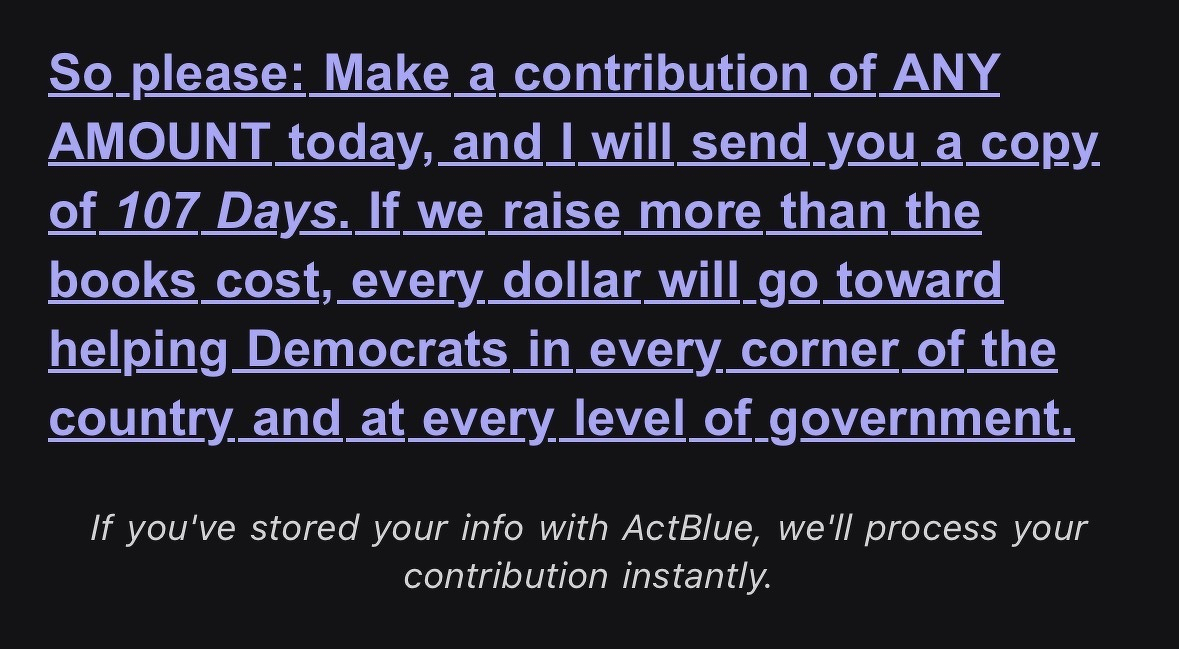
Kamala Harris using campaign email lists to sell her new book, while making it very unclear the terms in which that money goes to supporting candidates would fit perfectly as a Veep episode.

We may lose cognitive ability immediately after scrolling short form content feeds, aka FYP.
Pushing people’s retirement savings into AI-related stocks and/or data centre investments (the latter being a policy explicitly championed by Chrystia Freeland and Carney’s fellow former BoC Governor Stephen Poloz) further ties individual Canadians' financial well-being to the AI industry
oof
Kristi Noem says people should be prepared to prove US citizenship:
Department of Homeland Security (DHS) Secretary Kristi Noem advised reporters that Immigration and Customs Enforcement (ICE) officers may ask some Americans for proof of citizenship during enforcement operations
So, all Latin Americans must carry our passport and/or birth certificates or we might be locked up. There must be an easier way. Maybe a pin we can wear.
🍿 Now Watching: Harry and the Hendersons (1987)
“When you can’t believe your eyes, trust your heart.” What a tagline. The late eighties, early nineties was a kitsch renaissance.

Bandcamp’s Mission and Our Approach to Generative AI:
Today we are fortifying our mission by articulating our policy on generative AI, so that musicians can keep making music, and so that fans have confidence that the music they find on Bandcamp was created by humans.
AI Banned.

RIP Florida’s Lost Tourist Attractions. Long live Internet Archive.
Say it now or shut up forever
I believe there are political event horizons in our history—moments where our actions, or inactions, help or hinder our chances for real systemic change.
After Sandy Hook, when we didn’t burn it all to the ground (metaphorically speaking), we made gun reform all but impossible. Politicians now know there is nothing too horrendous that we’d (metaphorically) burn down a (hypothetical) Wendy’s about it. After George Floyd’s murder, when we stopped marching because they painted a street and cosplayed the Black diaspora, they knew we weren’t serious about defunding the police. And they were right after all.
This is that moment for ICE. If, even now, after the viral murder of Renee Nicole Good, our political and cultural leaders aren’t compelled to say the thing, then it’s a wrap.
Say the thing.
In the last week, I’ve seen lots of famously left-of-center white dudes getting real long in the tooth towards ICE suddenly. It has been surprising, but I love to see it. The only problem is, all of them have stopped short of saying the thing.
So, come on Stephen Colbert. Let’s get it poppin' John Gruber. Say the thing. Finish the damn job.
Because if it’s unjustified death that riles you up, boy, do we have some catching up to do. Imagine if we learned that at least 70 white people died in detention, or that they were issued forced sterilizations. There’d be riots in the Hamptons. If Mike Masnick can say it (finally) so can you.
Say the thing.
There’s a faction of the left who measures their intelligence by how reasonable they think they sound. The thought of being labeled frantic or unreasonable by their peers is so horrific that they’d sooner let the world burn before admitting we need radical change to put out the fire.
Even when they can bring themselves to call for meaningful change, they still must be wishy-washy about it. Even when it makes no sense.
maybe an unpopular position on this website but i think the moderate dem focus on ICE training can be, with political pressure, the pathway to more fundamental reforms. rhetorically it is not too hard to move from “more training” to “turns out they’re untrainable and we have to start all over.”
— jamelle @jamellebouie.net (bsky)
Jamelle understands what we must advocate for in this moment. He’s said as much. But like so many of his liberal academic peers, he can’t help but over intellectualize the problem, beating it until he achieves magical thinking.
Offering yet another concession to centrists in hopes that they finally see the light is silly. This has been going on for decades. The walk from “more training” to “turns out they’re untrainable” has proven over and over again too far for centrists.
Even if Jamelle has a valid point, why bring this up now, when people are looking for a little solidarity and certainty? Why martyr yourself on Bluesky?
Maybe what we need right now is less punditry and nuance, and more fight. We need the liberals with microphones to finally stand up for something, and not just against someone.
In the last decade, we’ve focused too heavily on the presence of one man. So that when he left, we had nothing left to object.
Yet, the infrastructure of fascism remained. Since 2020, ICE has grown in scope and authority. We’ve seen over eighty new militarized police bases break ground across the country. Because we bought into the lie that Trump was the root cause of the horrors we witnessed, a newly elected Biden was free to pass record-breaking budgets for the military industrial complex.
So, clearly, Democrats are not against fascist systems. They are against Trump’s access to them. And left-of-center liberals are not against the cogs of an ethnic cleansing, so long as they maintain control of the levers.
How lucky would we be if Trump had to start from a defunded DHS? But instead, we got the most productive 100 days of any president in recent history. We would not be where we are now if Democrats fought against the corporatization of our government, and the militarization of our police. To be clear, I’m not saying they tried and failed. Dems are largely pro-police state, pro-surveillance state and surveillance capitalism. That is a fact.
Militarized police bases, war-trained cops, record-breaking police budgets—all happened under the Biden administration. Trump doesn’t build weapons of fascism. He doesn’t build anything. Like all his failed businesses, he’s using what others have built and slaps his logo on it. So none of this ICE shit happens the way it is happening without the infrastructure built by his predecessors.
Now, the day Trump makes his final exit (that day can’t come soon enough), we’ll go right back to funding the dictator’s toolkit, assuming a dictator won’t ever get their hands on it again. When he inevitably does, we’ll act as if he built these systems from thin air.
I get things are objectively scarier than a year ago. I’m not saying Biden is as bad as Trump. Nor Democrats as bad as Republicans. What I am saying is, a big part of why Trump gets to be so scary is because we, on the left, don’t want to admit to ourselves that our preferred politicians put us in this predicament. We can acknowledge that militarized police are terrorizing the marginalized, but no one wants to ask why we have cops with tanks and the power to use them in the first place.
After George Floyd’s murder, liberals demanded reform, some even called for defunding. But we ended the conversation once we got back our plausible deniability from the American press; the day they stopped talking about it, and we stopped having to acknowledge it. As time went on, when the images of a man taking another man’s life were no longer fresh in our minds, we outright rejected the only viable solution for ending police brutality. And we did it in the name of centrist solidarity.
Liberals who declared the Defund the Police movement as “political poison,” do so as if they’re not the ones who get to decided if defunding police brutality is a worthy pursuit. So often, Liberals will play the role of political saboteur, then swap hats to become the political pundit observing their own undermining.
Say the thing.
A majority of Americans now support the abolishment of ICE. This is no longer a radical stance. But, people with the biggest microphones aren’t saying the thing. I love a good pithy monologue. But if it doesn’t end with “abolish ice, fade to black,” you’re wasting our fucking time, man.
Say the thing. Abolish ICE.
More People Want To Abolish ICE Than Keep It:
The poll published Jan. 13 from The Economist and YouGov found 46% of people support abolishing Immigration and Customs Enforcement, compared to 43% who are in opposition of the movement; 12% were unsure.
Promising. The question is, can this survive the wave of synthetic pushback we’re likely to see on social media now?

Last night on Bluesky, Crust News (creators of icelist.is) claimed to have data related to 4,000 ICE agents that they intend to release.
Today, ICE joined Bluesky.

What was the metaverse? - Fast Company:
Relabeling the digital economy as the “metaverse” was a simple, elegant move—as well as a deeply cynical effort to rebrand already existing digital markets as the next internet—that allowed forecasts to assume an air of inevitability.
Trump Labor Department’s Chilling Slogan Draws Damning Comparisons:
The department shared on X, formerly Twitter, an 11-second montage of American artwork captioned: “One Homeland. One People. One Heritage… The language immediately drew damning comparisons to the Nazi Germany slogan “Ein Volk, Ein Reich, Ein Führer,” which translates to “One People, One Realm, One Leader,”
Now that Mark Zuckerberg has officially announced Meta Compute, I want to share what I wrote two years ago.
I wrote Any Technology Indistinguishable From Magic is Hiding Something as an attempt to define Web 3.0. Where Web 2.0 is defined by its read/write capabilities, this new iteration can be defined by compute, or, computation power. Or, simply, consumption.
Later I wrote The Computational Web as sort of placeholder for a larger piece that I never ended up writing. But maybe I will soon.
After watching Jason Pargin’s fantastic video calling out OneDrive, I searched “OneDrive is Malware” and didn’t see any graphics. So in honor of that video (and hoping better graphic designers take the lead) I whipped this up while I should be working.


Thirty Years On, the Californian Ideology is Alive and Well:
In many areas of life now, technology has become a replacement for political debate and policymaking. It is enabled by what I call “innovation amnesia”—the tendency to forget past social arrangements when new tech comes along to undermine them.
The Fashion of Sci-Fi Futures:
Visions of the future are common in science fiction. From “The Fifth Element” to “Doctor Who” to “The Hunger Games,” we have imagined the future of fashion time and time again. But what if…it’s all weird and messed up and we have to write a video essay about it? What if it’s gender? What if we did a gender? A feminism? Boys in skirts? It’s all here!
Great video essay.
I wrote Hey You Horny Motherfuckers Here’s A Recipe For Shrimp Fried Rice during the height of lockdown. It’s crass, so forgive me.
Anyway, I’m making this today! Except, I’m substituting shrimp for skirt steak. I think it’ll turn out delicious. I’ll report back.
Either there are many more bird species where I live than in previous locations, or I am, in fact, just bird-watching age and my midlife third eye has awakened.


This blog uses Bear Blog Theme and Fantasque Sans Mono Font